
Now Reading: Snowy Owl Care
-
01
Snowy Owl Care
Snowy Owl Care
About Snowy Owl Care
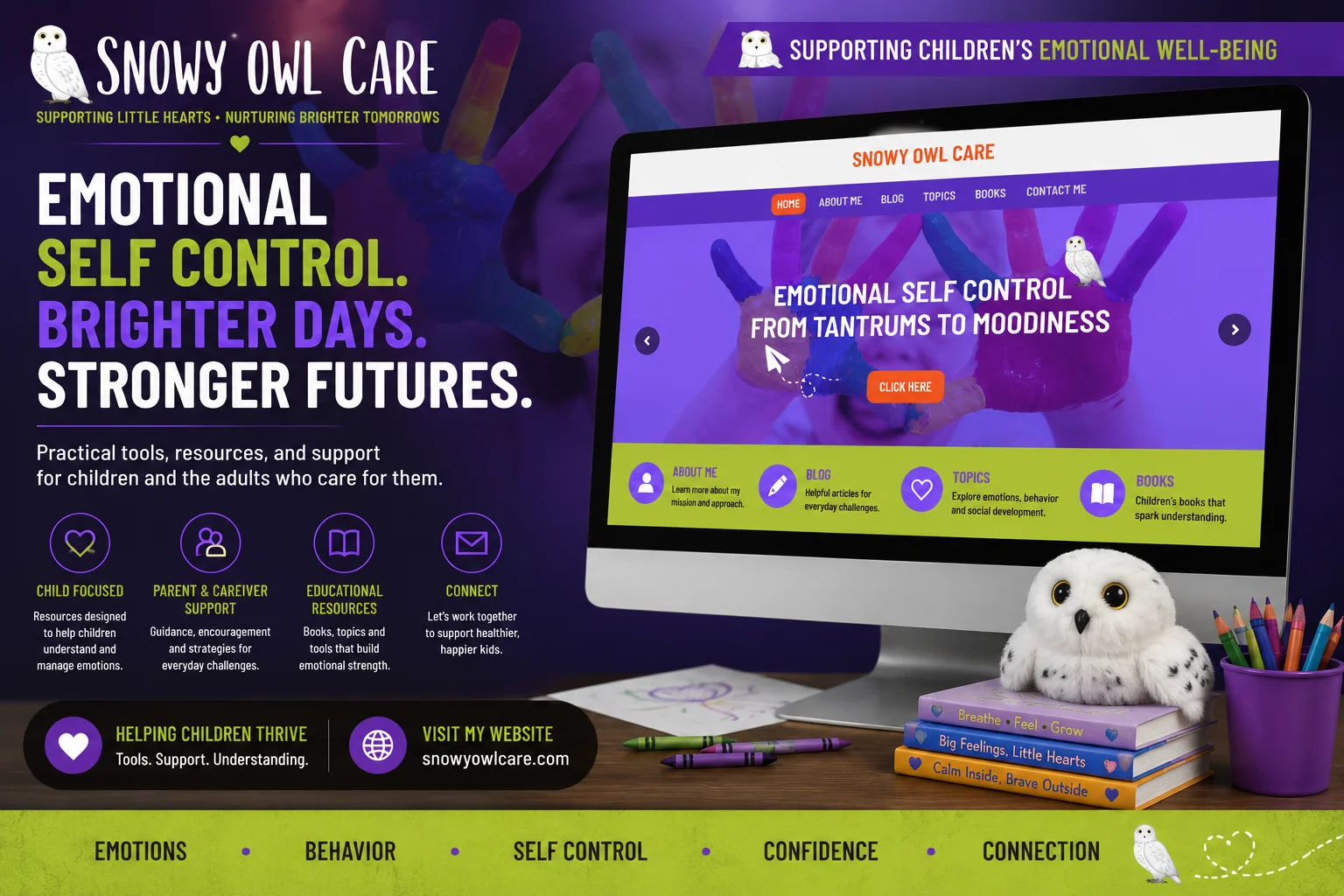
Snowy Owl Care is an educational parenting website created to help parents better understand and support young children during the important early childhood years.
I designed and developed Snowy Owl Care as a content-focused website where parents of children ages 3 to 6 can explore practical information based on early childhood education research and best practices.
Unlike a traditional business website, this project wasn’t built around selling a service. The website itself is the resource. That meant the design, navigation, content organization, and overall structure needed to make a large library of educational information approachable for parents.
Understanding the Purpose of Snowy Owl Care
Snowy Owl Care was created around a simple but meaningful mission: help parents interact with young children in healthier, more developmentally appropriate ways.
The site’s articles address situations parents encounter every day, including tantrums, children who won’t listen, sibling conflicts, bedtime struggles, cleaning up toys, emotional regulation, screen time, play, creativity, literacy, and building stronger relationships with children.
Rather than simply telling parents what they should or shouldn’t do, much of the content explains why young children behave in certain ways and provides practical techniques parents can use at home.
Designing a Content-First Website
Snowy Owl Care contains a substantial amount of written material, so one of my primary responsibilities was turning that information into an organized website.
I designed the homepage to introduce the purpose of Snowy Owl Care while directing parents toward some of the site’s most important subjects, including emotional self-control, resolving conflicts, getting children to listen, building relationships, children’s literacy, creativity, and developmentally appropriate practices.
This gives someone who discovers the website for the first time several clear starting points instead of presenting them with one long collection of unrelated blog posts.
Organizing Years of Parenting Content
Content organization was an especially important part of this project.
A parent dealing with a child who won’t listen has a very different immediate need than someone researching literacy, creativity, screen time, or emotional development. The website therefore needed a structure that allowed related articles to be grouped together while still making individual articles easy to discover.
I organized the content around major parenting and early childhood topics, creating pathways that allow visitors to continue reading about a particular issue rather than reaching the end of one article and leaving the website.
The result is a website that functions more like a parenting knowledge library than a conventional chronological blog.
Giving Individual Articles Room to Educate
One of the strengths of Snowy Owl Care is the depth of its individual articles.
Topics aren’t limited to short parenting tips. Articles can explore the developmental reasons behind a child’s behavior, explain specific parenting techniques, provide examples of how those techniques can be used, and reference educational research or other parenting resources.
For example, the website includes detailed discussions about children’s cognitive limitations when organizing and cleaning, how play contributes to intellectual and social development, techniques for helping children listen, and the underlying reasons young children may hit, bite, or fight.
My job was to create a website structure where that information remained readable and accessible without losing the substance of the original material.
Creating Resources Parents Can Actually Use
The content on Snowy Owl Care is heavily focused on practical application.
Parents can find information about setting boundaries, offering appropriate choices, helping children identify emotions, encouraging cooperation, resolving conflicts, establishing routines, managing screen time, developing language skills, and understanding age-appropriate behavior.
This practical approach influenced the website design. Visitors needed to be able to arrive with a specific parenting question, find relevant information, and continue exploring related subjects without having to understand the entire structure of the site first.
Supporting Both English and Spanish Content
Another interesting part of Snowy Owl Care is its inclusion of parenting information in Spanish.
The website contains a dedicated collection of Spanish-language articles covering many of the same types of parenting techniques and early childhood concepts found throughout the rest of the site.
Organizing this material within the larger website required maintaining a consistent experience while still making the Spanish resources easy for visitors to identify and access.
Building the Website for Long-Term Search Visibility
A large educational website also creates significant opportunities for organic search traffic.
Parents frequently search online using very specific questions: how to get a child to listen, why children fight, how to handle tantrums, how much screen time is appropriate, how to get a child to sleep, or how to encourage creativity and learning.
Snowy Owl Care already had substantive information addressing many of these questions. My role was to give that information a website structure that search engines could crawl and visitors could navigate.
Individual articles, topic sections, internal navigation, headings, and related content all contribute to building a stronger long-term foundation for the site’s educational material.
Preserving the Personality Behind the Content
One thing I didn’t want to do with Snowy Owl Care was turn it into a generic parenting website.
The value of the project comes from the knowledge, experiences, research, and perspective behind the articles. The website needed to support that material rather than overshadow it.
I kept the overall design approachable and family-oriented while using imagery and organization to make a large amount of educational content feel less intimidating.
A Website Built to Educate
Snowy Owl Care is a good example of a website where successful development isn’t measured by how many features can be added.
The challenge was taking a substantial collection of parenting and early childhood education material and building an online resource that makes that knowledge easier to discover, understand, and use.
As additional articles and resources are published, the website can continue developing into an even larger library for parents looking for thoughtful, research-informed approaches to raising young children.
Visit the finished project at SnowyOwlCare.org.